
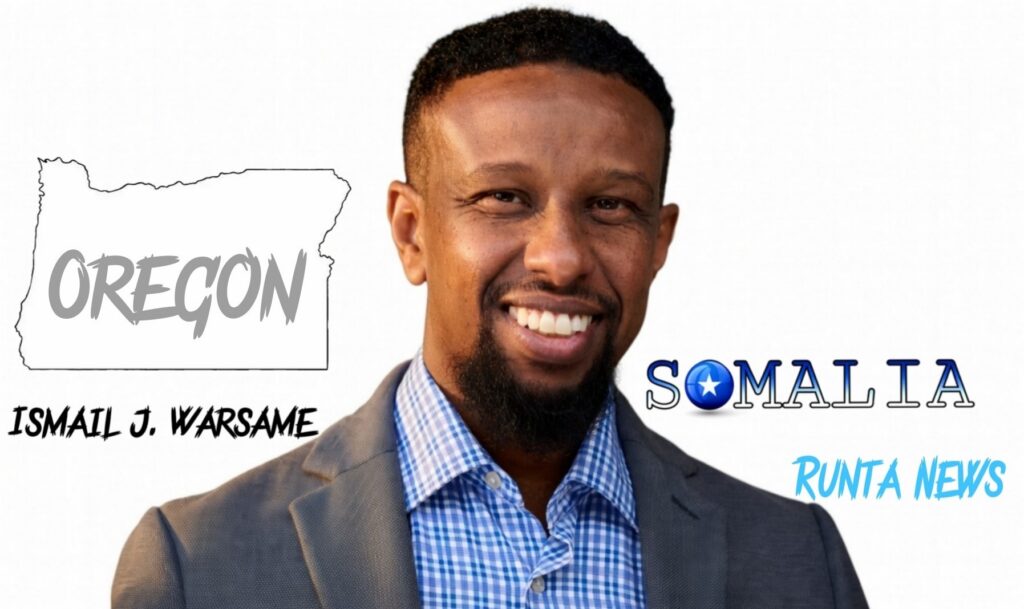
By Ismail Warsame for Runta News
Calling Oregon “home” is both complicated and comforting.
As a Somali-born, naturalized American citizen, I often hear people like me discussed as a political issue rather than as neighbors. Our identities become subjects of media commentary, public suspicion and arguments about who belongs. Behind those debates are families who have worked hard to build a home.
Anyone whose family has crossed an international border to start over knows something about that work: learning a language, navigating unfamiliar laws, finding employment and rebuilding a sense of belonging.
Almost three decades ago, my family arrived in Portland, Maine, with a few suitcases and plenty of hope. We faced a new country, a new culture and weather unlike anything we had known. Over time, we learned English, earned academic credentials and entered the American workforce. This country became our home.
Sixteen years ago, I moved to Oregon as a recent university graduate to work at Oregon State University. I spent a dozen years advising students and helping the university meet the government requirements for hosting international students and scholars.
My work also involved responsibilities that reached beyond campus. I served on the university’s infectious disease response team, helping develop screening protocols related to Ebola, Zika and MERS. I worked with local, state and federal law enforcement to help keep students safe while advocating for respectful treatment and due process.
Oregon has been good to my family. My wife, pregnant with our first child, joined me a month after I arrived. Both of our children were born here. Today, they are teenagers, and both have become state champions, our son in freestyle wrestling and our daughter on beam at the state gymnastics meet. Both have also represented Oregon beyond its borders, our son at national wrestling tournaments and our daughter at a regional gymnastics’ championship.
We have built our lives here. We are proud Oregonians.
Yet that pride exists alongside the steady experience of hearing my birthplace and fellow Somali Americans disparaged. Nobody chooses where they are born. But if I could choose my birthplace today, I would still choose Somalia. That may surprise people who know the country primarily through headlines about war and instability. My memories also hold joy: family, hospitality, laughter and a community in which people looked after one another.
Somalis could be wonderfully blunt. If you were slacking, someone told you. If you were persistently grumpy, it might become your nickname. Adults who saw children misbehaving felt responsible for correcting them, and parents usually reinforced the lesson at home. We called adults “uncle” or “aunt,” whether we were related or not. Addressing an elder by a first name was considered disrespectful. Even today, I sometimes pause over how to address someone older than me.
Those habits reveal how deeply our upbringing stays with us. Cultural values do not disappear when we cross a border. An airplane ride does not erase the person who boards it. Carrying those experiences has helped me connect with people in Oregon. It has taught me to adapt, persevere and recognize something familiar in lives that may initially seem very different from mine.
When I learned about Vanport, that connection became especially clear.
I remember speaking with a Black Oregonian from the Portland area about his family’s experience of the flood and my family’s experience of Somalia’s civil war. The places, circumstances and eras were different. But we recognized something in each other’s stories: the loss of a home, the determination to rebuild and the responsibility to carry a family forward.
I have felt similar connections in conversations with Haitians, Palestinians, Rwandans, people from Myanmar and Americans displaced by Hurricane Katrina. Each story deserves to be understood on its own terms. Each also offers a chance to recognize another person’s hopes and humanity.
That is what I ask of my fellow Oregonians: get to know the people behind the labels. Judge us by our actions, our contributions and how we treat our neighbors. Leave room for the histories and aspirations we bring with us.
Somalia is where my story began. Oregon is where my wife and I raised our children and built our lives. Both belong to the story of who I am. Calling Oregon home is comforting because of the life we have made here. It becomes complicated when belonging seems to require explaining, again and again, why our origins do not diminish our commitment to this place.
Ismail Warsame, M.Ed., PMP is the Founding Director of Global Insights Collective. He is also an activist, avid advocate, and a regular contributor to Runta News. He lives with his lovely family in Oregon State, Northwest of the United States of America. Website: https://globalinsightscollective.com/